


Breakthrough Research on High-Performance Flexible Thermoelectric Devices
Recently, Prof. Chong'an Di' team from the Institute of Chemistry, Chinese Academy of Sciences, has achieved a major breakthrough in the field of flexible thermoelectric devices. By innovatively combining the Soft X-ray Imaging Beamline (BL07W) and the Resonant Soft X-ray Scattering Beamline (BL05U-B) of Hefei Light Source, the team successfully revealed the cross-scale microstructure of polymer thin films with irregular hierarchical porous structures through multi-modal imaging and scattering characterization techniques, providing critical structural information support for the development of high-performance flexible thermoelectric devices with record-breaking figures. The related research was published in Science on March 6, 2026, under the title Irregular hierarchical-porous polymer for high-performance soft thermoelectrics.
Flexible thermoelectric devices can convert human body heat into electrical energy, showing broad prospects in wearable electronic devices. However, the performance of traditional polymer thermoelectric materials is difficult to meet practical demands. The core challenge lies in simultaneously reducing thermal conductivity and improving electrical conductivity, two properties that are often mutually restrictive in conventional materials. To address this problem, the team proposed an innovative "irregular hierarchical porous" design strategy. Through precisely controlled phase separation, the team constructed irregularly shaped and distributed pore structures in polymers with sizes ranging from several nanometers to several micrometers, successfully developing irregular hierarchical porous thermoelectric polymer (IHP-TEP) materials (as shown in Figure 1). This unique cross-scale porous structure effectively scatters heat propagation (phonons) while enhancing the crystallinity and charge transport properties of the material, ultimately achieving an ultrahigh thermoelectric figure of merit (zT) of 1.64, setting a new world record for the performance of flexible polymer thermoelectric materials.
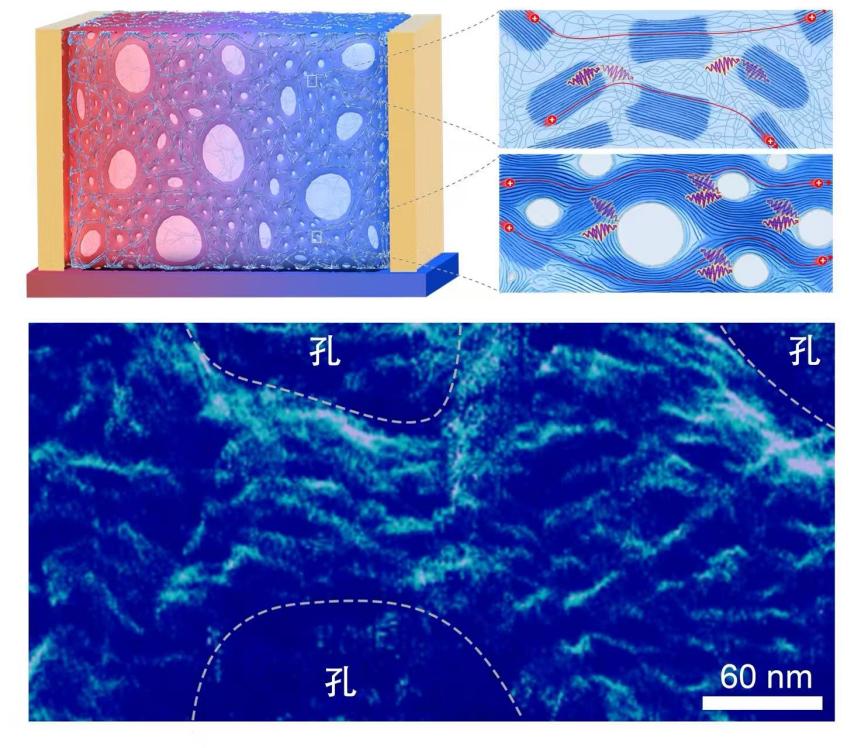
Figure 1. Design concept of the IHP-TEP structure
In this research, the two soft X-ray beamlines of Hefei Light Source played an irreplaceable multi-modal characterization role through the combination of imaging and scattering: The Resonant Soft X-ray Scattering Beamline (BL05U-B) provided a core method for analyzing the statistical information of hierarchical porous structures. resonant soft X-ray scattering (RSoXS) characterization on polymer blend thin films at a photon energy of 240 eV were performed at this beamline. Experimental results showed that the PDPPSe-12/polystyrene (PS) blend thin films exhibited an extremely wide phase separation size distribution ranging from 5 nm to 560 nm, with three characteristic peaks at approximately 20 nm, 230 nm, and 450 nm (as shown in Figure 2). This result directly confirmed the cross-scale hierarchical distribution of irregular hierarchical porous structures from the nanometer to the micrometer scale in a statistical average sense, providing key quantitative evidence for understanding its multi-scale phonon scattering mechanism. The nano-computed tomography (nano-CT) technique of the Soft X-ray Imaging Beamline (BL07W) provided intuitive evidence for the visualization of three-dimensional pore networks. The team performed high-resolution three-dimensional reconstruction of hierarchical porous thin films under different polymer ratios via nano-CT, visually demonstrating the variation laws of pore size, porosity, and pore throat distribution with material ratios. The three-dimensional reconstructed images clearly revealed that the optimal irregular hierarchical porous network was formed in the thin film when the PDPPSe-12/PS ratio was 70:30, with a porosity of 0.23 and pore throat sizes mainly concentrated around 150 nm (as shown in Figure 3). More importantly, the imaging results directly exhibited the irregular shape and random distribution characteristics of the pores, which are the key structural factors that break through the predictions of traditional theoretical models and achieve an additional significant reduction in thermal conductivity. The irregularity directly observed through imaging complements well with the statistical average information obtained by scattering techniques.
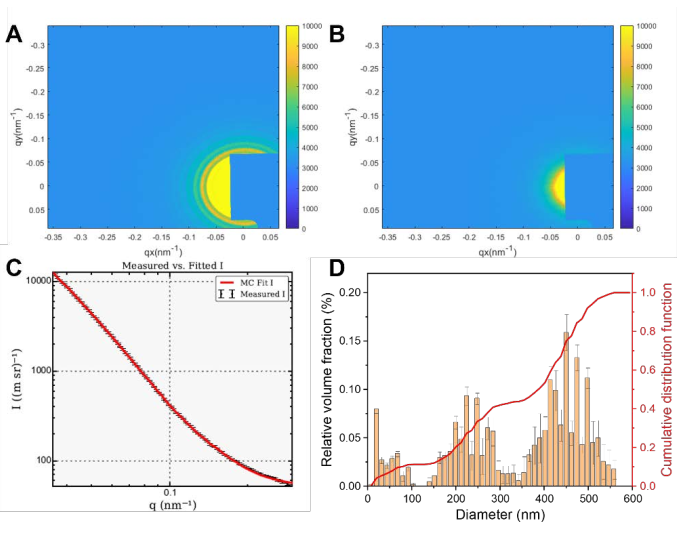
Figure 2. RSoXS characterization results of PDPPSe-12/PS (70:30) blend film

Figure 3. Nano-CT characterization results of PDPPSe-12/PS blend films at different ratios
This research combines the statistical and quantitative advantages of scattering techniques with the intuitive visualization capability of imaging techniques, establishing a comprehensive understanding of irregular hierarchical porous structures from average size distribution to real three-dimensional morphology. This multi-modal characterization strategy accurately constructs the structure-activity relationship between complex microstructures and macroscopic thermoelectric properties, fully demonstrating the powerful capability of synchrotron radiation light sources in the research of advanced functional materials. Multi-modal characterization has become an indispensable research paradigm for analyzing the structures of such complex systems and revealing their working mechanisms.
Research link: https://www.science.org/doi/10.1126/science.adx9237
Back