


X-ray 3D CT Reveals Uniform Catalyst Dispersion for Durable Green Hydrogen Production
In a significant advancement for green hydrogen technology, a research team led by Academician Tongwen Xu and specially appointed Professor Xiaolin Ge at the University of Science and Technology of China has achieved a breakthrough in anion exchange membrane water electrolysis (AEMWE). They developed an innovative covalent catalyst immobilization strategy that uses an in-situ crosslinked ionomer network to uniformly disperse and firmly anchor non-precious metal catalysts (NiFe). This approach successfully addresses critical challenges in pure water AEMWE.
The resulting system delivers exceptional performance and durability under pure water conditions, achieving a current density of 2.55 A cm⁻² at 1.9 V and maintaining stable operation over 1,800 hours with a minimal degradation rate of only 0.03 mV h⁻¹. This performance significantly surpasses previously reported pure water AEMWE systems. The breakthrough not only overcomes the issue of conventional catalyst-ionomer interfacial instability but also substantially improves the mechanical strength and structural integrity of the catalyst layer, offering a new pathway for developing high-performance, low-cost green hydrogen production technologies.
The Critical Role of X-ray 3D CT
A key element in validating this innovative catalyst immobilization strategy was the use of advanced synchrotron-based characterization. Synchrotron radiation X-ray three-dimensional computed tomography (3D CT), conducted at the Soft X-ray Imaging Beamline (BL07W) of the Hefei Light Source, played a pivotal role in directly visualizing the microstructure of the catalyst-ionomer interface.
For the first time, researchers were able to intuitively demonstrate the spatial distribution of the crosslinked ionomer on the catalyst surface. The X-ray 3D CT imaging revealed that the in-situ crosslinked ionomer network was uniformly distributed across the NiFe catalyst particles. In contrast, control samples prepared without this strategy exhibited a non-uniform, heterogeneous distribution. This direct visualization provided critical evidence confirming that the in-situ crosslinking approach successfully promotes intimate and uniform integration between the ionomer and the catalyst.
By enabling this direct observation of the catalyst layer’s 3D architecture, X-ray 3D CT did more than just verify catalyst dispersion uniformity. It also revealed how the crosslinked ionomer network optimizes the transport pathways for reactants, offering a crucial microscopic perspective for the rational design and optimization of catalyst layers. This non-destructive, high-resolution imaging technique was essential in confirming the structure–function relationship that underpins the system’s exceptional performance and durability.
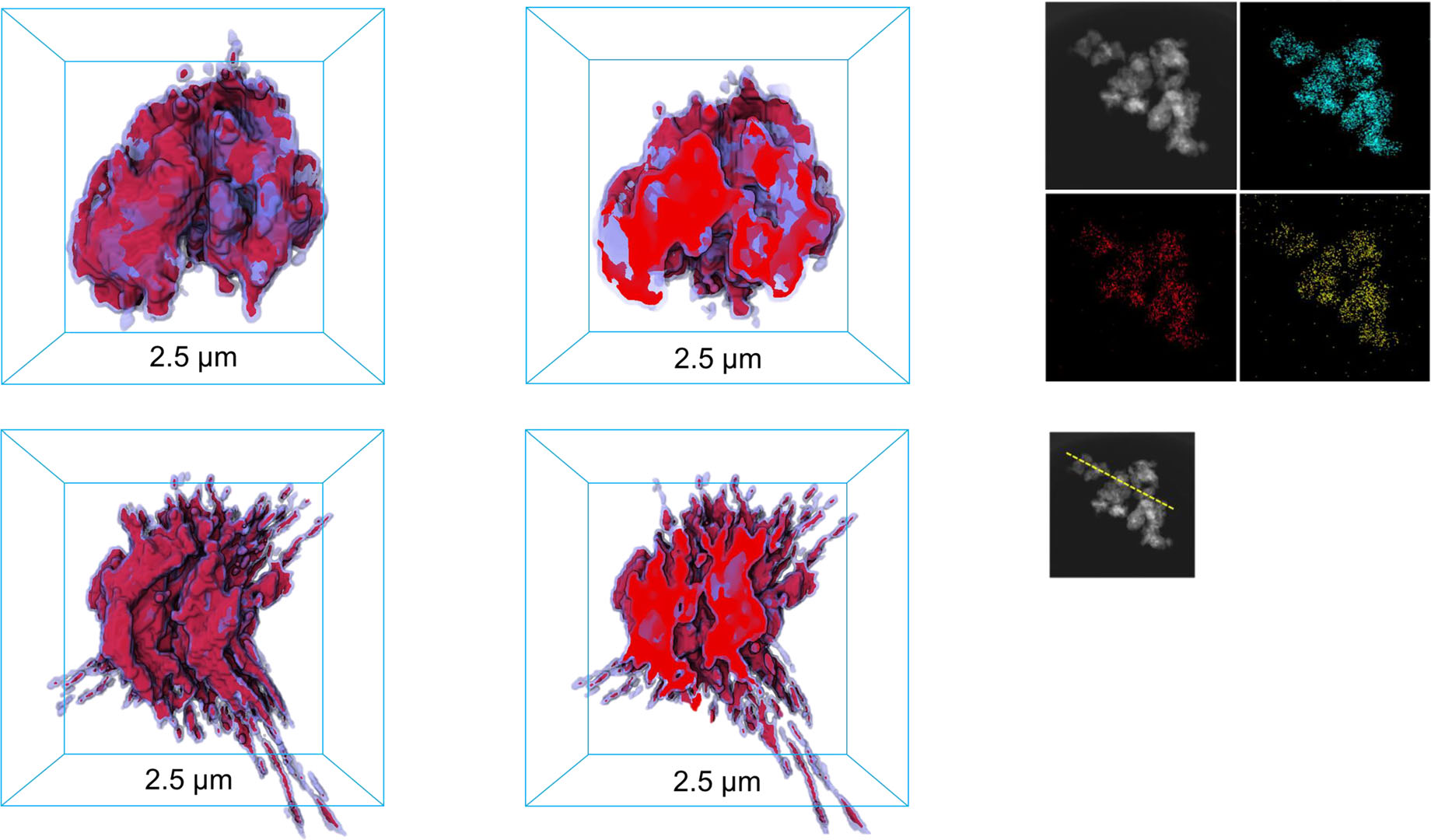
Figure 1 Synchrotron radiation X-ray three-dimensional nano-imaging results of the NiFe catalyst.
This work is published in Nature Communications under the title “Covalent catalyst immobilization in crosslinked ionomers for durable pure water anion exchange membrane electrolysis.”
Full article: https://doi.org/10.1038/s41467-025-65254-5
Back