


USTC Achieves New Progress in Infrared Free-Electron Laser Nanospectroscopy and Catalysis Research
Precisely identifying molecular structures, chemical bonding states, and their spatial distributions at the nanoscale is essential for understanding the origins of material properties and catalytic reaction mechanisms. In recent years, nano-infrared spectroscopy has emerged as a powerful tool for nanoscale chemical analysis. However, owing to the limited spectral coverage and brightness of conventional infrared sources, current nano-infrared techniques mainly operate in the mid-infrared region and remain inadequate for probing low-frequency vibrational modes in the far-infrared range, such as metal–ligand coordination bonds, hydrogen bonds, and lattice vibrations. Infrared free-electron lasers (IRFELs) offer unique advantages, including continuous wavelength tunability over a broad spectral range, high brightness, and high coherence. They are currently the only high-brightness coherent light sources capable of continuous tuning throughout the far-infrared region. Therefore, advanced IRFEL-based nano-infrared spectroscopy, which can simultaneously provide nanoscale morphological and far-infrared molecular structural information, is expected to establish a new paradigm for investigating local structures and catalytic reaction mechanisms in complex material systems.
Recently, a research team led by Prof. Tao Yao, Prof. Jun Bao, and Assoc. Prof. Jiawei Xue from the National Synchrotron Radiation Laboratory at the University of Science and Technology of China (USTC) reported significant progress in IRFEL nano-infrared spectroscopy and catalytic research. The team developed a novel two-dimensional metal–organic coordination polymer catalyst, Cu-Btz-Hz, which achieved a methane Faradaic efficiency of 61% at a high current density of 800 mA cm-2, substantially outperforming conventional Cu–N–C single-atom catalysts. Using IRFEL nano-infrared spectroscopy, the researchers precisely characterized the molecular structure of the catalyst and uncovered the structural origins of its exceptional catalytic performance. The work, entitled “Metal-π Sites Localized Hydrogen-*CO Coupling for Enhanced CO2 Electromethanation”, was published in Angewandte Chemie International Edition and was selected as a Very Important Paper (Angew. Chem. Int. Ed. 2026, e4689245).
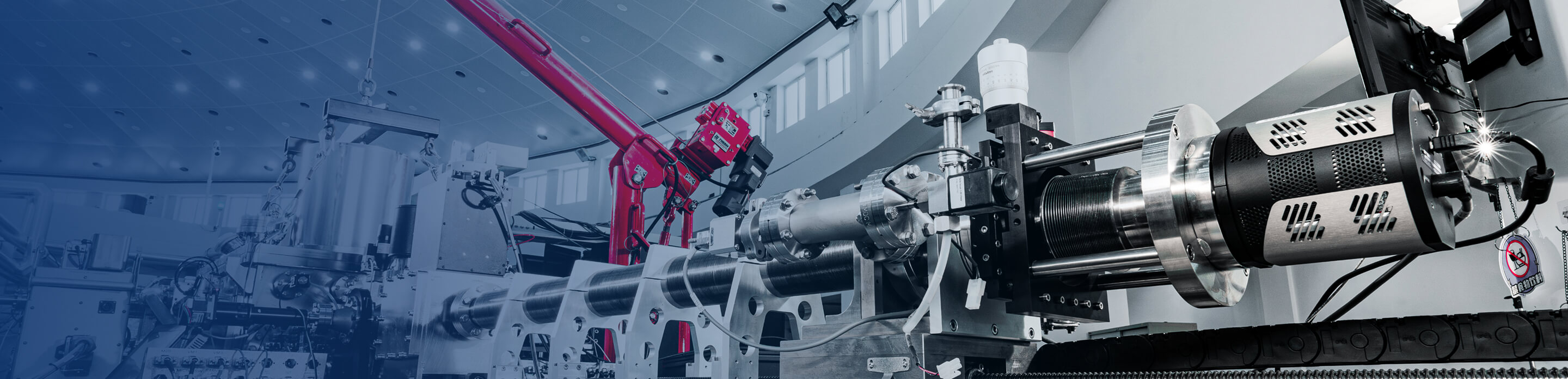
Leveraging the nano-infrared spectroscopy endstation of the Hefei Infrared Free Electron Laser (HiFEL), the researchers achieved several important advances:
1. Direct Observation of Cu–N Coordination Bonds
Due to the limited brightness of conventional Fourier-transform infrared (FTIR) spectroscopy, vibrational signals associated with Cu–N coordination bonds are often difficult to detect. By contrast, HiFEL nano-infrared spectroscopy successfully resolved a distinct Cu–N vibrational peak at 660 cm-1, directly confirming the coordination interaction between Cu atoms and the organic ligands. This observation provided crucial experimental evidence supporting the proposed molecular structure of the catalyst.
2. Nanoscale Chemical Imaging Reveals Uniform Active-Site Distribution
The team further performed nanoscale chemical imaging of the catalyst structure. The results revealed a highly uniform spatial distribution of Cu–N signals across the material. This direct visualization demonstrated the presence of periodically repeated Cu–π structural units throughout the catalyst. Such a homogeneous distribution of active sites is considered a key factor underlying the catalyst’s remarkable selectivity and stability.
3. Detection of Critical Intramolecular Hydrogen Bonds in the Far-Infrared Region
More importantly, HiFEL nano-infrared spectroscopy detected strong intramolecular hydrogen-bond vibrations in the 200–300 cm-1 far-infrared region, signals that are nearly inaccessible using conventional FTIR techniques. The study showed that these hydrogen bonds, formed between hydrogen atoms in the –NH–NH– groups and nitrogen atoms in the triazole rings, effectively stabilize the two-dimensional layered structure of the catalyst and significantly enhance its electrochemical stability. Constant-current electrolysis tests conducted over 20 hours showed almost no decline in methane selectivity, further validating the structural advantages provided by these hydrogen-bonding interactions.
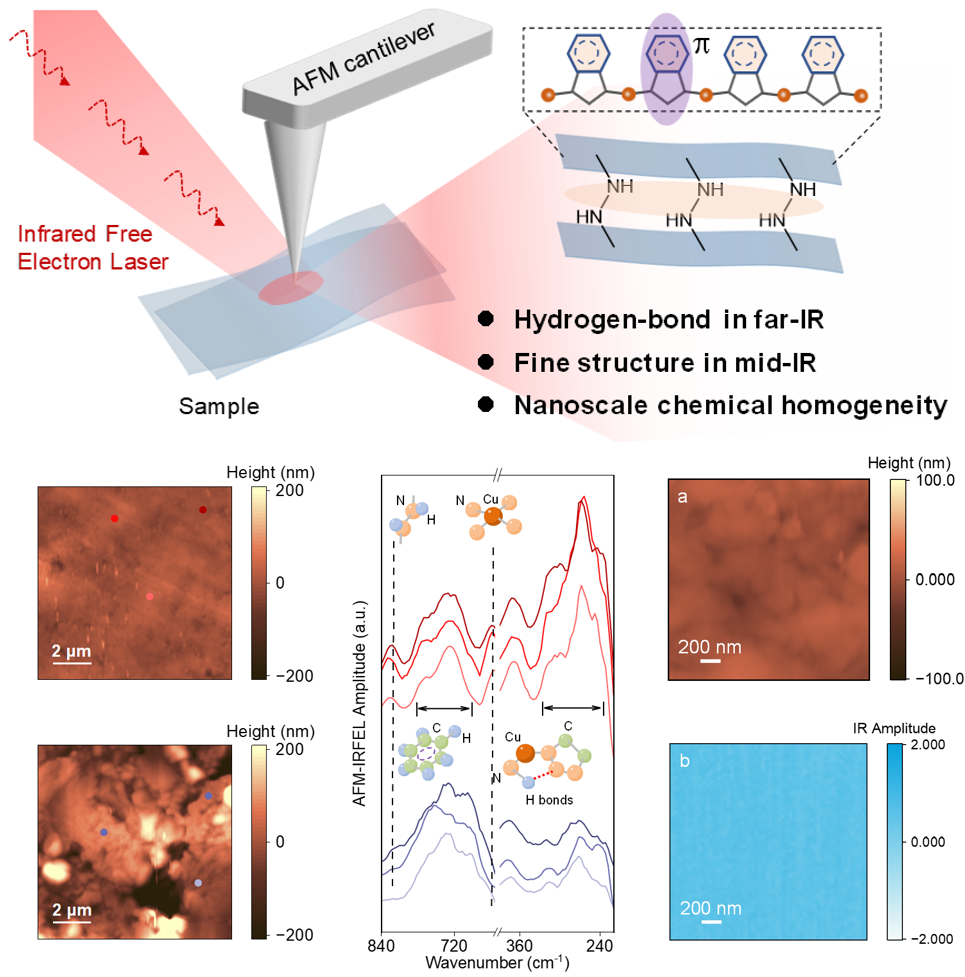
Figure 1. Molecular Structure Characterization of Catalytic Materials by Infrared Free-Electron Laser Nanospectroscopy
Through the support of a USTC source optimization and upgrade project for the Large-Scale Experimental Facility for Energy Chemistry Research Based on Tunable Infrared Lasers, the performance and stability of the HiFEL source were substantially improved, providing the essential light-source foundation for this study.
The corresponding authors of the paper are Prof. Tao Yao, Prof. Tao Ding, Assoc. Prof. Jiawei Xue, and Dr. Dong Liu. The co-first authors are M.S. student Mengyuan Liu, Prof. Tao Ding, and Ph.D. candidate Shuaiwei Jiang. This research was supported by the National Science Fund for Distinguished Young Scholars, the National Key Research and Development Program of China, and beamtime support from the National Synchrotron Radiation Laboratory, the Shanghai Synchrotron Radiation Facility, and the Beijing Synchrotron Radiation Facility.
Article Link:https://onlinelibrary.wiley.com/doi/10.1002/anie.4689245
Back